A garage door is frequently the largest moving object on a property, and nobody appreciates that until something goes wrong. For homeowners around Mint Hill, NC, the decision to install a new door or replace an older unit involves more than picking a color and style. It requires attention to local climate, driveway geometry, opener compatibility, code compliance, and a clear understanding of the installation process. This article walks through how Rise Up Garage Doors approaches installations in Mint Hill, what you should expect on-site, and how to avoid costly mistakes in the months and years after installation.
Why the process matters here Mint Hill winters are mild but humid, summers are hot, and storms occasionally bring strong winds. These conditions affect material choice, hardware corrosion, and insulation needs. A poorly installed door can rattle in gusts, leak air and water, or strain an opener and springs. Proper installation reduces emergency service visits, keeps energy bills lower for conditioned garages, and preserves curb appeal — all reasons homeowners call for Garage Door Installation Mint Hill NC rather than attempting a DIY swap.
A short story from the field A few years ago I replaced a warped single-car door on an older bungalow near Matthews-Mint Hill Road. The homeowner had bought a door online to save money and scheduled a weekend install. On arrival I found the header and jambs had several degrees of twist from age, the concrete threshold had settled, and the opener mount was too low for the model they bought. Correcting those issues added a full day to the project and about 30 percent to the cost.
There are very real trade-offs between cheap parts plus DIY labor and a professionally managed installation. When you work with a local contractor like Rise Up Garage Doors, you pay for inspection, correct measurement, code awareness, and experience setting up hardware so the door works reliably for years.
Pre-install inspection: what a pro looks for Before any install most technicians perform a brief, targeted inspection. This is not a decorative consult. A confident tech checks structure, hardware, and safety clearances that will determine the right approach. Typical items examined include header strength, side jamb plumbness, floor level at the threshold, available headroom inside the garage, whether the opener will have a convenient wall switch and wifi signal, and if there are obstructions such as ducts or water lines above the opening.
Two small but crucial measurements often decide whether a standard torsion spring system will work or whether a low-headroom conversion is needed, or even a vertical lift section. A misread here creates additional labor and expense. For example, when headroom is less than six inches above the header, many standard tracks will not fit and you need specialized low-headroom hardware.
Materials and styles: practical considerations Homeowners often start with style. Carriage style, modern aluminum and glass, steel laminates, or composite materials, each bring different weight, insulation value, and maintenance needs. These are the practical trade-offs to weigh.
Steel doors are economical and durable. They can be insulated with polyurethane or polystyrene for R-values commonly in the R-6 to R-18 range depending on thickness and construction. Insulation matters if the garage is conditioned or used as a workspace. An insulated door lowers heat transfer, reduces condensation, and improves how the opener performs in extreme temperatures.
Wood and wood composite doors offer warmth and authenticity but require routine sealing and periodic repainting in Mint Hill’s humidity. Aluminum and glass panels look modern and resist rust, but in our area glass units can transfer heat—select low-e coatings or insulated glass if the garage needs climate control.
Local building code and wind ratings Some parts of Mecklenburg County require certain wind load ratings when replacing doors, particularly if you’re near more exposed areas. Rise Up Garage Doors is familiar with local permit expectations and will install doors that meet any required wind load or framing reinforcement. If your property is in a special flood or wind zone, the header and jambs may need reinforcement and installers will apply straps or anchors that meet local code.
How installers plan the day A competent crew arrives with a clear plan. For a typical single or double-car replacement, the day splits into four stages: removal of the old door and hardware, frame and surface preparation, installation of the new door and track hardware, and calibration with final inspections and demonstrations. For new construction the sequence differs, but the core steps of precise measurement, leveling, and setting anchors remain.
Most installs for a residential, single-family door take three to six hours once the crew has unobstructed access. Larger custom doors or unusual situations such as replacing a carriage house unit, adding decorative hardware, or retrofitting insulation can extend that time. If the job requires structural changes to the opening, expect a multi-day schedule and coordination with a carpenter or mason.
Removal and preparation: patience matters Removing the old door looks simple until the old springs and tracks fight back. Tensioned springs store dangerous energy; professionals decompress and secure them with the correct tools. Old tracks and fasteners are checked for rust or damage that might have helped ruin the previous door. If the jamb or header is rotted or out of square, the installer will recommend repair before the new door is hung. Leaving a warped frame in place is a false economy; a misaligned frame causes the new door to rub, bind, or operate dangerously.
Anchoring and level are two practical priorities. Anchor bolts in the header, firmly seated into masonry or reinforced wood, keep the door stable under wind load. The sill plane must be level enough that the bottom seal contacts the floor uniformly. When a slab has settled, installers can shim the bottom seal, add a threshold, or recommend concrete repair, depending on the degree of discrepancy and the homeowner’s budget.
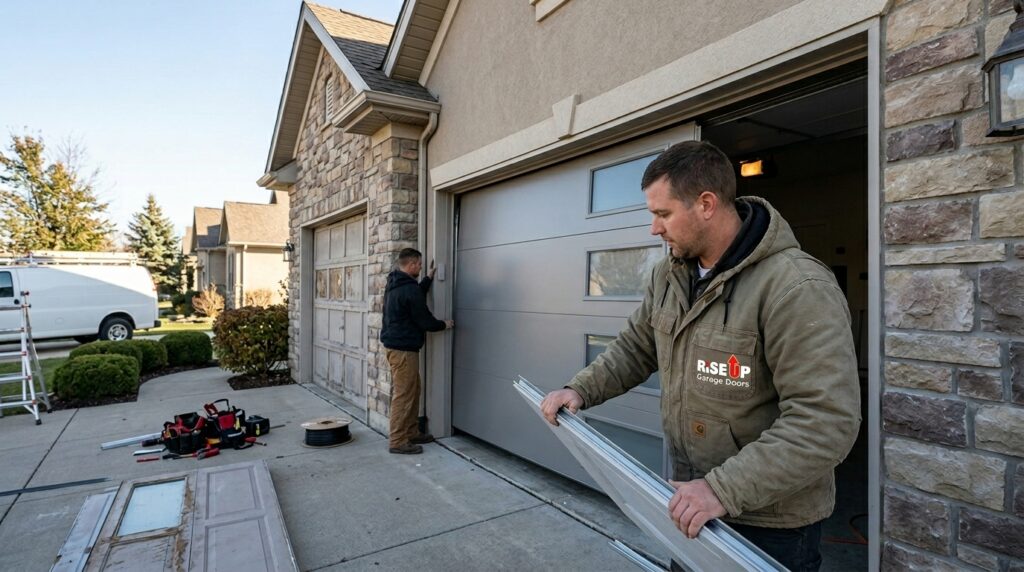
Hardware choices: springs, tracks, rollers, and openers Springs come in two main types for residential doors: torsion and extension. Torsion springs live above the door and provide smooth, predictable balance. They tend to be quieter and safer when installed correctly. Extension springs sit on the sides and stretch as the door opens. Older homes sometimes have extension springs. For many homeowners, upgrading from extension to torsion improves door life and reduces maintenance needs, although it costs more up front.
Roller quality affects noise and wear. Nylon rollers with sealed bearings run quieter and last longer than basic steel rollers. Tracks should be set straight and plumb; even a slight kink accelerates wear and creates noisy operation. Hinges and brackets that are galvanized or stainless resist corrosion and are a sensible investment in Mint Hill’s humidity.
Openers are a separate decision tree. Belt-drive openers run quietly and suit attached garages and living spaces above. Chain-drive units are durable and economical, but noisy. Screw drive openers are simpler but can require more maintenance in temperature extremes. Many modern openers include smart features, battery backup, and built-in diagnostics. A smart opener is helpful if you want notifications and remote control, but remember added electronics mean more to troubleshoot later. If your priority is long-term simplicity and minimal electronics, choose a high-quality belt or chain drive without the frills.
One practical note: mixing an undersized opener with a heavy insulated door is a common mistake. The opener must match the door weight and spring balance. When Rise Up Garage Doors installs a new door, they typically replace or retune the opener to match the new load.
Step-by-step walkthrough of a typical installation day There are variations, but a typical residential install follows this flow.
Arrival and safety. Crew places cones or signs and confirms the work area with the homeowner. Tools and parts are staged.
Old door removal. Springs are decompressed, cables disconnected, and the sections are removed carefully. Hardware and tracks are set aside, and the opening is cleared.
Frame inspection. Header, jambs, and the floor threshold are checked. Any minor adjustments are made, and the homeowner is shown any significant issues that require follow-up.
Track and bracket installation. Vertical tracks are set plumb and temporarily secured. Torsion tube and springs are mounted if applicable. Anchors are measured and drilled for final fasteners.
Section installation and balance. Panels are installed, rollers placed, and initial balance is tested. Tuning springs to achieve a near-perfect balance so the door stays open at chest height is crucial.
Opener mounting and configuration. The opener is mounted, connected to the door, and the travel limits and force settings are precisely calibrated. Safety sensors are aligned and tested multiple times.
Final checks and demonstration. The door is cycled repeatedly, sensors tested with an object in the path to ensure reversal, and the homeowner is shown how to manually disconnect the opener in case of power loss.
Most of the above is visible to the homeowner, but the nuanced adjustments made in step five determine how long the door will function quietly and safely.
Post-install commissioning: small steps that prevent callbacks Good installers do several small actions that prevent returns. They lubricate bearings and rollers with a recommended lubricant, tighten fasteners to specified torque values, and leave adjustment access clear. They Garage Door Spring Repair in Mint Hill NC also set the opener’s force limits conservatively, then fine-tune them based on how the door responds after several cycles.
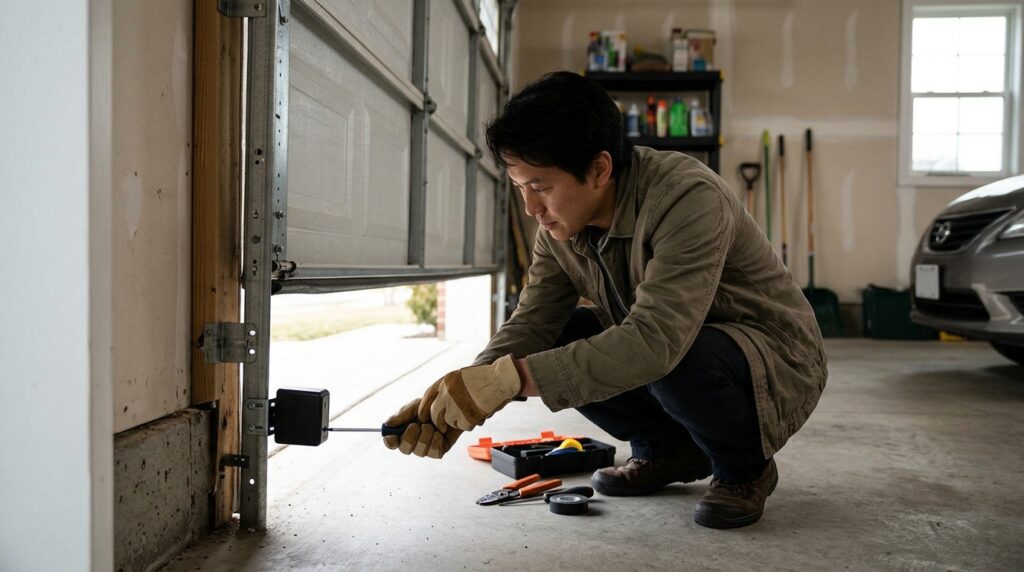
A simple test I use involves raising the door to waist height and letting it sit for a minute. If the door drifts up or down significantly, the springs are not balanced and demand immediate adjustment. A properly balanced door minimizes opener workload and extends spring life. As a rule of thumb, a balanced two-car door might require springs rated to hold roughly 150 to 350 pounds depending on construction; precise values depend on actual door weight measured during installation.
Common complications and how professionals handle them Not all days run smooth. Corroded tracks that split when you try to drill them, wrong-sized openers delivered by DIY buyers, or buried electrical wiring above the header are examples of common surprises. Here is how professionals typically respond.
When the header is rotted or too thin, they rebuild or sister the framing, using plates or engineered lumber as required by code.
When the opener lacks enough clearance, a low-profile jackshaft or wall-mount opener may be recommended.
When the slab is severely out of level, options include replacing a section of concrete, installing a raised threshold, or using a custom bottom seal to maintain weather resistance.
These are judgement calls that reflect experience; a reputable installer explains the options and the trade-offs in cost and durability.
Maintenance and what homeowners should do A new door is not zero maintenance. Simple quarterly checks reduce the chance of emergency service. Inspect cables and springs visually for rust or fraying. Listen for any new grinding or unusual vibration. Test the reversal system monthly by placing a 2x4 on the floor under the door; the door should reverse as it touches the board. For openers with sensors, wipe the lenses clean and verify alignment.
If you notice sudden changes in balance, or the door begins to stick in one spot, call a professional rather than wrestling with spring tension. Springs and cables store energy that can cause serious injury when mishandled.
Questions to ask before you hire Before selecting an installer, verify a few things that protect your investment and your safety. Ask about liability insurance and worker compensation coverage. Request references and check recent online reviews specific to Mint Hill or nearby communities. Confirm whether the installer brings manufacturer-certified parts and whether the team will provide a written estimate with a clear warranty on labor and materials.
If you want a short checklist, consider these five questions to ask your installer before they start.
- Are you licensed and insured to work in Mint Hill and do you have proof? What warranty do you provide on labor and the specific door components? Will you inspect the header and jambs and explain any required repairs before installation? Do you provide a written estimate and a clear timeline for completion? Who will perform follow-up service and how quickly can you respond for warranty work?
Why choosing a local specialist matters Hiring a local firm like Rise Up Garage Doors brings more than proximity. Local contractors know the weather patterns, common house styles in the area, and local code requirements. They are easier to reach for warranty service and they often stock common parts for quicker repairs. In Mint Hill, this means faster turnaround on Garage Door Repair Mint Hill NC calls, reliable guidance on Garage Door Replacement in Mint Hill NC, and quicker response for Garage Door Opener Repair in Mint Hill NC when a motor fails at an inconvenient hour.
Pricing realities and value Costs vary widely depending on door material, size, insulation, and hardware. A basic steel single-car door and installation can be economical, while a custom insulated aluminum and glass double-car door with a premium opener and smart features is considerably more. Ask for itemized pricing so you can weigh whether a higher-grade spring, stainless hardware, or a battery backup opener is worth the added expense for your use case. Sometimes a mid-grade door with a durable opener and stainless hardware performs better over a decade than an expensive door installed with subpar springs and cheap rollers.
Final notes on safety and long-term thinking Treat garage doors like important mechanical systems, not just decorative elements. Proper installation and thoughtful choices in hardware reduce the risk of accidents, lower long-term costs, and preserve your home’s value. If you’re in Mint Hill and searching for Garage Door Installation Mint Hill NC or a trusted local team to handle everything from Garage Door Replacement in Mint Hill NC to Garage Door Opener Repair in Mint Hill NC, look for experience, transparent pricing, and a record of reliable follow-up service.
Rise Up Garage Doors brings local knowledge, trained technicians, and a focus on installations that perform quietly and safely for years. When the work is done right, you gain not only a new look for your home, but peace of mind every morning when the car backs out and the door closes behind you.
Rise Up Garage Doors
Mint Hill, NC, United States
+1 (980) 240-2447
[email protected]
https://riseupgaragedoors.com/